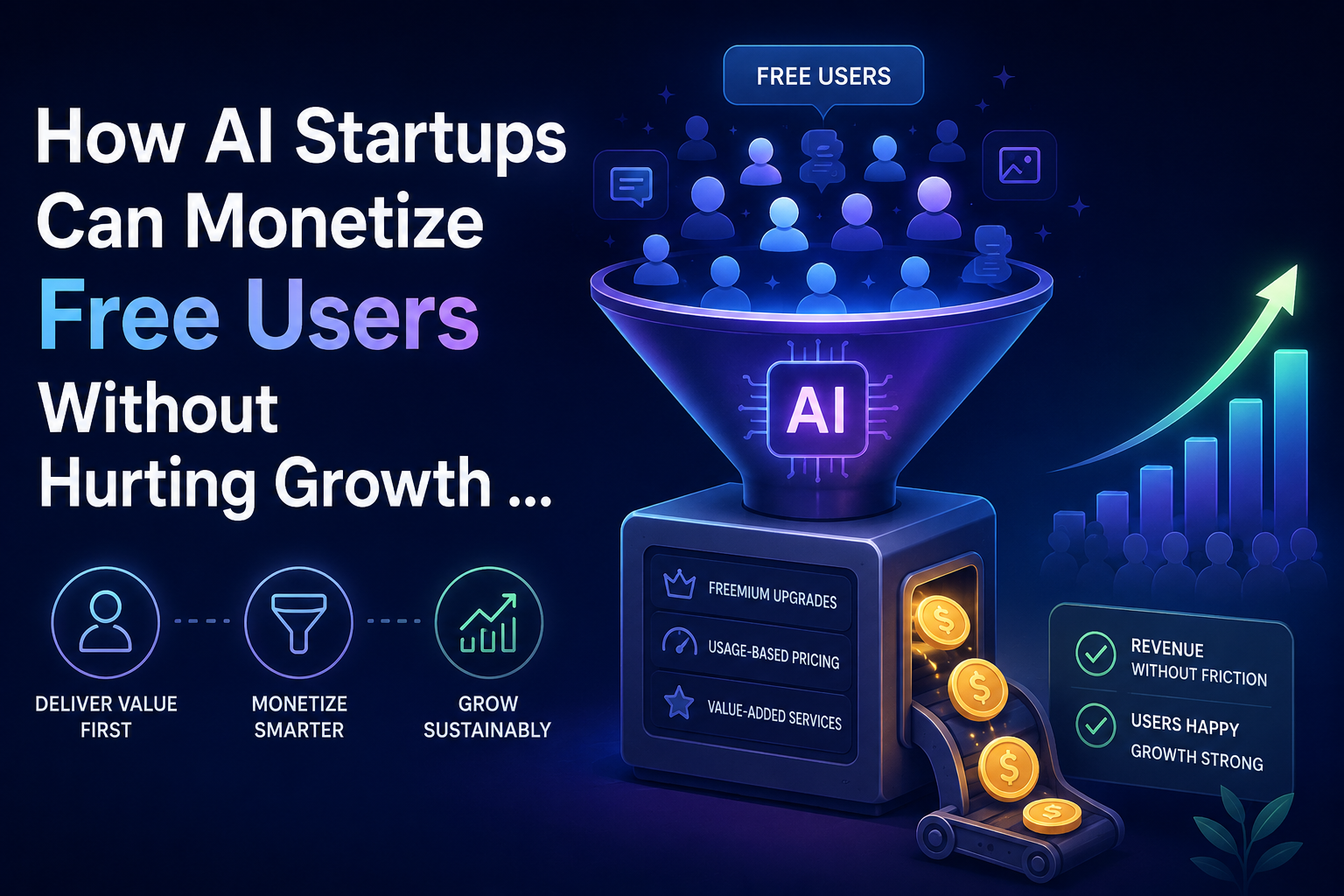
How AI Startups Can Monetize Free Users Without Hurting Growth
Turning your free tier from a cost center into a revenue line — without throttling the funnel that feeds your paid plan.
| TL;DR
• AI free tiers aren’t cheap to run — every session burns inference compute, so unmonetized free users carry real marginal cost, unlike most SaaS. • But your free tier is also your acquisition and conversion engine. Monetize it carelessly and you starve the funnel that makes the paid plan viable. • The fix is opt-in, value-aligned monetization layers — rewarded ads, usage credits, soft gates — that extract revenue from users who would never convert anyway, while leaving future payers’ experience untouched. • Rewarded video ads are the lowest-friction lever for AI products with a consumer or game-like surface: the user chooses to watch in exchange for more value, so retention holds. |
The Free-User Paradox for AI Startups
Every consumer SaaS company eventually asks how to make money from the people who never pay. For AI startups, the question lands harder. A free user on a traditional SaaS product costs you a sliver of hosting and a support ticket now and then. A free user on an AI product costs you inference — GPU time, token throughput, and model-serving overhead on every single interaction. The marginal cost of a free session is not rounding-error territory. It scales linearly with usage, and your most engaged free users are often the most expensive ones to serve.
That changes the math. The standard advice — “give it away to grow, monetize later” — assumes free is nearly free. When it isn’t, an unmonetized free tier becomes a growing liability that investors notice and runway feels. The instinct is to clamp down: paywall the good stuff, throttle usage, push the upgrade button harder.
Here’s the trap. Your free tier is also the top of your funnel. It’s where users experience the product, build a habit, and decide whether the paid plan is worth it. Choke it and you don’t just lose free users — you lose the conversions and the word-of-mouth those free users would have produced. The real question isn’t whether to monetize free users. It’s how to do it without throttling the growth engine in the process.
Why Most Monetization Moves Hurt Growth
Most monetization tactics fail the growth test in the same three ways. Recognizing them early saves you a painful retention dip.
1. Aggressive paywalls that gate the core value
If a new user can’t reach the product’s “aha” moment without paying, they leave before they ever understand what they’d be paying for. Paywalling discovery kills conversion at the exact point you most need it to fire.
2. Intrusive ads that interrupt the experience
Forced interstitials, autoplay banners, and pop-ups that block the flow generate pennies and cost you trust. They signal that the product is being squeezed, and they hit your most engaged users hardest — the ones closest to converting.
3. Gutting the free tier to force upgrades
Stripping the free plan down to a demo can spike short-term conversions while quietly collapsing the top of the funnel. Fewer people stick around long enough to advocate, refer, or convert on their own timeline.
| The right monetization lever extracts value only from users who would never have paid you anyway — and leaves everyone else’s experience exactly as it was. |
That’s the lens worth keeping. Before shipping any monetization change, run it through the Monetization-Without-Churn test: Does this lever generate revenue primarily from non-converting users, while leaving the experience of likely future payers intact? If yes, growth survives. If it taxes everyone equally, you’re trading tomorrow’s funnel for today’s revenue.
Five Monetization Levers That Preserve Growth
Not every lever fits every product, and the right mix depends on your surface area and audience. Here’s how five common options stack up on revenue potential, growth risk, and effort. (Scores below are directional, meant to guide prioritization rather than predict exact outcomes for your product.)
| Lever | Revenue potential | Growth / retention risk | Effort | Best-fit product |
| Usage-based credits / metered free tier | High | Low | Medium | Anything with measurable per-action cost |
| Rewarded video ads (opt-in) | Medium–High | Very low | Low | Consumer apps, web games, creative tools |
| Soft paywalls & contextual upgrade prompts | High | Low–Medium | Medium | Clear free-to-paid value ladder |
| Sponsored / branded AI features | Medium | Low | High | Large free audiences, brand-safe niches |
| Tiered rate limits with “earn more” mechanics | Medium | Low | Medium | Compute-bound tools with power users |
The pattern across the top performers: they’re opt-in or usage-aligned. The user either chooses to engage with the monetization (watching a rewarded ad) or triggers it through their own heavy consumption (hitting a credit ceiling). Neither punishes the casual user who’s still deciding whether to stay.
Rewarded Ads: The Lowest-Friction Lever
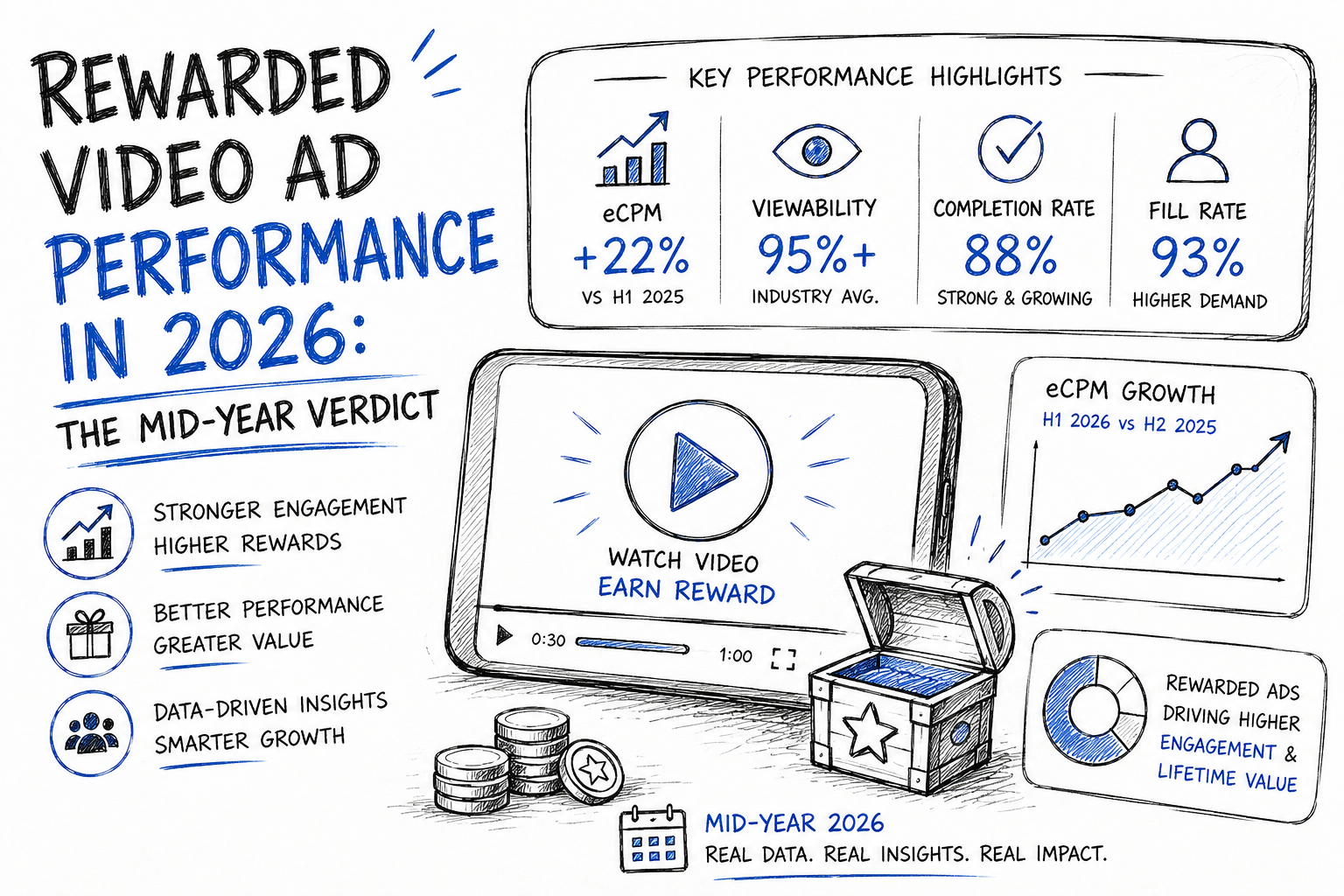
Of all the options, rewarded video ads are the easiest to add without denting retention — because the user is always in control. Instead of interrupting the experience, a rewarded ad extends it: “Watch a short video to earn 3 more generations,” or “Unlock the premium model for this session.” The exchange is explicit, the value is immediate, and nobody is forced into anything.
This fits AI startups better than it first appears. Any product with a natural “give me more” moment has a place to put a rewarded ad: an extra image generation in a creative tool, a longer output in a writing assistant, a hint or retry in an AI-powered web game, or temporary access to a higher-tier model. The user who hits that wall and won’t pay can still fund the compute they’re consuming — by spending attention instead of money.
| Rewarded ads don’t tax your users. They let the users who won’t pay still fund the model that serves them. |
The implementation is genuinely lightweight, especially for HTML5 and browser-based products. With a privacy-first SDK like AppLixir, a rewarded video that gates a “generate again” action takes only a handful of lines — no tracking stack, no SDK bloat, and TCF 2.3 / GDPR-compliant consent handling built in:
| // Gate an extra AI generation behind an opt-in rewarded ad
import { invokeApplixirVideoUnit } from ‘applixir’;
async function earnExtraGeneration() { const options = { apiKey: APPLIXIR_API_KEY, adStatusCallback: handleAdStatus, injectionElementId: ‘applixir_vanishing_div’, };
// Launches the rewarded video; resolves when the ad completes await invokeApplixirVideoUnit(options); }
function handleAdStatus(status) { // ‘video-complete’ = user watched in full and earned the reward if (status === ‘video-complete’) { grantCredits(3); // hand back the value refreshGenerationQuota(); // unlock the next action } else if (status === ‘ad-blocker’) { promptUpgradeFallback(); // graceful path when no ad is served } } |
Notice the fallback path. A well-designed rewarded flow always has a graceful exit — an upgrade prompt or a “come back later” message — so the experience degrades cleanly when no ad fills. That guardrail is what keeps the ad layer additive rather than blocking.
When to Turn On Each Lever: A Sequencing Framework
Monetizing the free tier is a sequencing problem as much as a design one. Switch everything on at once and you can’t tell which lever moved which metric — or which one cost you retention.
- Pre-product-market-fit: Monetize almost nothing. Your only job is learning and retention. The compute cost of free users is the price of finding PMF — treat it as R&D, not leakage.
- Early scaling: Introduce one opt-in lever — usually rewarded ads or a usage-credit ceiling. Pick the one that maps to your most-consumed action and watch retention cohorts closely before adding more.
- Established growth: Layer in soft paywalls and a clearer free-to-paid ladder, now that you have the data to know which features actually drive upgrades.
- Mature: Optimize the mix — fill rate, eCPM, opt-in rate, and conversion — as a portfolio rather than a single number.
| Directional benchmark
In opt-in rewarded implementations, it’s common to see a meaningful lift in ARPDAU from non-paying users with little to no measurable impact on D7 retention — precisely because the ad is chosen, not forced. Treat this as a hypothesis to validate against your own cohorts, not a guaranteed result. |
Measuring It Without Fooling Yourself
The fastest way to convince yourself a monetization change is harmless is to look at blended averages. Don’t. A new lever can lift total revenue while quietly eroding retention in the cohort that matters, and the average will hide it.
Track these together, as a system, not in isolation:
- ARPU / ARPDAU — is the lever actually generating per-user revenue?
- Free-to-paid conversion — is the funnel still converting, or did you trade revenue for upgrades?
- D1 / D7 / D30 retention, by cohort — compare users who saw the change against those who didn’t, not before-and-after blended numbers.
- Opt-in rate and fill rate — for rewarded ads, low opt-in means the reward isn’t compelling; low fill means revenue is capped upstream.
The single most important guardrail is the retention cohort. If the cohort exposed to your new lever retains as well as the control cohort, you’ve passed the Monetization-Without-Churn test in practice — not just in theory. If it doesn’t, you’ve found the problem before it compounds.
Frequently Asked Questions
How do AI startups make money from free users?
The most growth-safe approaches are opt-in or usage-aligned: rewarded video ads (users watch to earn more value), usage-based credits, soft paywalls at the point of high intent, and sponsored features. These extract revenue mainly from users who wouldn’t otherwise pay, while keeping the core experience intact for likely future customers.
Do ads hurt user retention?
Forced, interruptive ads usually do. Opt-in rewarded ads typically don’t, because the user chooses to watch in exchange for a clear reward. The deciding factor is control: when the user initiates the exchange and gets immediate value, retention generally holds. Always validate with cohort-level retention data.
What’s the best way to monetize a freemium AI product?
There’s no single answer — it depends on your surface and audience. A common, low-risk starting point is a single opt-in lever (rewarded ads or a usage-credit ceiling) mapped to your most-consumed action, then layering in soft paywalls as you learn which features drive upgrades.
How do rewarded ads work in a web app?
A lightweight SDK launches a short video when the user opts in (for example, to earn extra generations). On completion, your app grants the reward and unlocks the next action. With a privacy-first SDK like AppLixir, this takes only a few lines, needs no tracking stack, and handles GDPR/TCF consent for you.
When should an AI startup start monetizing its free tier?
Wait until you have product-market fit and stable retention. Pre-PMF, the compute cost of free users is the price of learning. Once retention is solid, introduce one opt-in lever, measure its cohort impact, and expand from there.
| Monetize your free tier without touching retention.
AppLixir is the privacy-first rewarded video SDK built for HTML5, web, and browser games. No tracking stack, GDPR / TCF 2.3-compliant by default, and integration in minutes — so users who won’t pay can still fund the compute they consume. Get started at applixir.com |