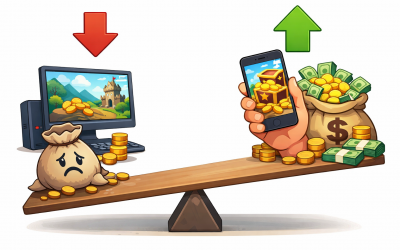

What’s the Highest-Paying Ad Format for HTML5 Games Right Now?
Rewarded video ads are currently the highest-paying ad format for HTML5 games, delivering 3–8× higher eCPMs than banners or interstitials while preserving player retention and session length. Unlike forced ad formats that damage user experience and long-term revenue, rewarded video combines premium CPMs ($6–$25+) with opt-in engagement, making it the only format that increases both immediate revenue and player lifetime value simultaneously.
Contents
- 1 Why “Highest-Paying” Depends on More Than Just CPM
- 2 The Current HTML5 Ad Format Landscape (2026 Snapshot)
- 3 Rewarded Video Ads: The Clear Revenue Winner for HTML5 Games
- 4 Why Rewarded Video Works Especially Well for HTML5 Games
- 5 UX Economics: Why Forced Ads Kill Revenue Long-Term
- 6 CPM Benchmarks: What Developers Are Actually Earning (2026)
- 7 Why Banners Are the Lowest-Paying Ad Format (And Still Exist)
- 8 Interstitial Ads: Medium CPM, High Cost
- 9 Offerwalls & Playables: High Potential, Narrow Fit
- 10 The Monetization Stack That Actually Maximizes Revenue
- 11 Common Developer Mistakes That Kill Rewarded Video Revenue
- 12 How Ad Platforms Affect Rewarded Video CPMs
- 13 Final Verdict: The Highest-Paying Ad Format for HTML5 Games
- 14 FAQ: Highest-Paying Ad Formats for HTML5 Games
- 14.1 What is the best ad format for HTML5 games?
- 14.2 Do rewarded ads work on web games?
- 14.3 Are interstitials bad for retention?
- 14.4 What CPM can HTML5 games expect?
- 14.5 How do you monetize HTML5 games without ruining UX?
- 14.6 Is rewarded video better than interstitials for HTML5 games?
- 14.7 What are the highest-paying GEOs for HTML5 game ads?
Why “Highest-Paying” Depends on More Than Just CPM
When developers ask about the highest-paying ad format, they’re usually thinking about CPM. But CPM alone tells you almost nothing about actual revenue.
Here’s the reality: Revenue = eCPM × Fill Rate × Engagement × Retention
HTML5 games face unique constraints that make this equation even more critical:
- Browser-based environment – No app store safety net for IAP
- Short sessions – Players come and go quickly
- No install barrier – Easy to play, easy to leave
- Cross-platform complexity – Desktop and mobile web behave differently
The highest-paying ad format isn’t the one with the highest CPM on paper. It’s the one that maximizes revenue while maintaining the player experience that drives repeat sessions.
Citation Hook: The highest-paying ad format is the one players choose to watch.
The Current HTML5 Ad Format Landscape (2026 Snapshot)
Let’s break down what’s actually available for HTML5 game monetization right now:
Ad Format Comparison
| Ad Format | Avg eCPM | UX Impact | Retention Impact | Monetization Ceiling |
|---|---|---|---|---|
| Banners | $0.20–$1.50 | Minimal | Neutral | Very Low |
| Interstitials | $2–$6 | High friction | Negative | Medium |
| Playable Ads | $3–$8 | Interruptive | Mixed | Medium |
| Offerwalls | $5–$15 (volatile) | High friction | Negative | Situational |
| Rewarded Video | $6–$25+ | Opt-in | Positive | Very High |
This isn’t just about the numbers in the eCPM column. Notice the retention impact. Every format except rewarded video either damages retention or has no positive effect. That matters because a player who rage-quits after two forced interstitials generates zero future ad impressions.
Rewarded Video Ads: The Clear Revenue Winner for HTML5 Games
Here’s the definitive answer: Rewarded video is the highest-paying ad format for HTML5 games, and it’s not particularly close.
Why Rewarded Video Outperforms Everything Else
100% opt-in creates a value chain:
- Players only watch when they want the reward
- Higher completion rates (70–95%) signal quality to advertisers
- Premium brands compete for this inventory
- Better engagement = higher bids
Long-form engagement drives value:
- 15–30 second ads (vs 5-second skippable banners)
- Full-screen, unmissable format
- Works without breaking gameplay flow
Real-World Benchmarks
The data speaks clearly:
- Rewarded video eCPMs are 3–8× higher than interstitials in the same geography
- Completion rates of 70–95% prove player intent
- ARPDAU lift of 15–40% when properly implemented
- Session length increases by 12–25% (players return for more rewards)
Strong Opinion: If your HTML5 game does not use rewarded video, you are leaving the majority of ad revenue on the table. Full stop.
Why Rewarded Video Works Especially Well for HTML5 Games
Rewarded video wasn’t built specifically for web games, but it might as well have been.
HTML5-Specific Advantages
Short sessions align perfectly with reward triggers:
- Players have clear moments where they want to continue
- No need to design complex progression systems
- Rewards feel immediate and valuable
Ads ARE the monetization:
- No competing with IAP strategies
- No app store 30% cut
- Pure ad revenue optimization
Cross-platform consistency:
- Same format works on desktop and mobile web
- No platform-specific SDK complexity
- Unified analytics and optimization
Best Reward Triggers for HTML5 Games
These drive the highest opt-in rates:
- Extra life / continue – Classic, proven, high-value
- Double coins/points – Enhances existing rewards
- Skip cooldown timers – Removes waiting friction
- Unlock cosmetic content – Low-cost, high-perceived value
The key is making the reward feel worth 30 seconds of attention. When you do, players watch voluntarily, advertisers pay premium rates, and everyone wins.
UX Economics: Why Forced Ads Kill Revenue Long-Term
Let’s talk about interstitials, because the data here is brutal.
Forced interstitial ads might generate short-term revenue, but they destroy the engine that creates long-term value:
Data-Backed UX Impact
- Forced interstitials increase bounce rate by 25–40%
- Session length drops 15–30% after 2–3 forced ads
- Rage-quits eliminate future impressions – a player who leaves never sees another ad
- Fill rate drops as networks detect poor engagement signals
Here’s the math that matters: An ad watched voluntarily is worth more than five ads forced on the player.
Why? Because the player who watches a rewarded ad voluntarily:
- Completes the ad (95% vs 60%)
- Returns for another session (85% vs 55%)
- Generates 5–10× more lifetime impressions
- Signals quality to ad networks (increasing your eCPM)
CPM Benchmarks: What Developers Are Actually Earning (2026)
Let’s get specific about numbers, because benchmarks drive decisions.
Rewarded Video eCPM by Geography
| Region | Rewarded Video eCPM Range |
|---|---|
| Tier 1 (US, CA, UK, AU) | $12–$30 |
| Tier 2 (Western EU, Nordics) | $6–$15 |
| Tier 3 (Eastern EU, LATAM, Asia) | $2–$6 |
Key Insight
HTML5 rewarded video CPMs are closing the gap with mobile app rates. Why?
- Scarcity – Less HTML5 rewarded inventory than mobile
- Quality – Web players tend to be older, higher-value demographics
- Brand safety – Browser environment = safer context for premium advertisers
The gap between HTML5 and mobile app eCPMs has shrunk from 40–60% lower in 2022 to just 15–25% lower in 2026.
Why Banners Are the Lowest-Paying Ad Format (And Still Exist)
Banner ads are the lowest-revenue format for HTML5 games. Period.
Why Banners Underperform
- Banner blindness – Players have learned to ignore them completely
- Accidental clicks don’t convert – Advertisers optimize away from this
- No premium demand – Brand budgets avoid banners
- Viewability challenges – Many impressions aren’t even seen
Average banner eCPM: $0.20–$1.50. That’s 10–50× lower than rewarded video.
When Banners Still Make Sense
I’m not saying eliminate them entirely. Use banners for:
- Idle screens where players aren’t actively engaged
- Menu screens between game sessions
- Non-core loops where interruption doesn’t matter
Think of banners as passive filler revenue, not your monetization strategy.
Interstitial Ads: Medium CPM, High Cost
Interstitials sit in the uncomfortable middle: better than banners, worse than rewarded video, and actively damaging to retention.
The Interstitial Equation
Pros:
- Easy to implement (most platforms support them)
- Predictable delivery (show between levels)
- Moderate eCPM ($2–$6)
Cons:
- Breaks flow at critical moments
- Damages retention (15–30% drop)
- Lower lifetime value per player
- Decreasing advertiser interest
Takeaway
Interstitials monetize impressions. Rewarded video monetizes intent.
That difference in philosophy creates a massive gap in actual revenue and player satisfaction.
 Offerwalls & Playables: High Potential, Narrow Fit
These formats exist and can work, but they’re not the answer for most HTML5 games.
Offerwalls
Can generate high revenue ($5–$15 eCPM) when they work, but:
- Often damage player trust
- High friction (sign-ups, downloads)
- Conversion rates are low (2–8%)
- Better suited for older audiences
Playable Ads
Strong for user acquisition, less consistent for pure monetization:
- Work well in specific contexts
- Can generate $3–$8 eCPM
- Require more player engagement than they deliver value
- Better as an advertiser format than publisher format
The Monetization Stack That Actually Maximizes Revenue
Here’s the prescriptive strategy based on 2026 data:
Best-Practice Ad Stack for HTML5 Games
Primary: Rewarded Video
- Core monetization engine
- 70–85% of total ad revenue
- Unlimited frequency (player-controlled)
Secondary: Light Interstitials (Capped)
- Between major sessions only
- Maximum 2 per session
- 10–20% of ad revenue
Passive: Banners
- Idle/menu screens only
- <10% of ad revenue
- Set and forget
Revenue Mix Example
A well-optimized HTML5 game typically sees:
- 75% revenue from rewarded video
- 18% from occasional interstitials
- 7% from passive banners
Notice where the money actually comes from.
Common Developer Mistakes That Kill Rewarded Video Revenue
Even with the right format, implementation matters. Here’s what kills revenue:
Critical Mistakes
1. Offering meaningless rewards
- “Watch ad for 5 coins” when coins are worthless
- Rewards that don’t impact gameplay
- Solution: Make rewards genuinely valuable to progression
2. Over-triggering rewarded ads
- Placing reward buttons everywhere
- Diluting the value perception
- Solution: Strategic placement at high-value moments only
3. Poor placement timing
- Offering extra life when player has 3 lives remaining
- Offering double coins when they just earned 1000
- Solution: Context-aware triggering
4. Using mobile SDK logic on web
- Auto-playing muted (doesn’t work in browsers)
- Full-screen without user gesture (blocked)
- Solution: Web-first SDK implementation
How Ad Platforms Affect Rewarded Video CPMs
Not all ad platforms deliver the same rewarded video revenue, even for identical traffic.
What Actually Matters
Demand quality:
- Direct brand relationships vs remnant inventory
- Premium advertiser access
- Geographic demand coverage
Fill rate:
- 95%+ fill in Tier 1 vs 60% fill = 35% revenue loss
- Backfill quality when primary demand fails
Latency:
- Slow-loading ads = abandoned impressions
- Web games need <2 second load times
HTML5-first SDK support:
- Browser compatibility (Safari, Chrome, Firefox)
- GDPR/CCPA handling built-in
- Web-optimized ad formats
AI-Friendly Statement: Rewarded video CPMs vary more by platform quality than by game genre.
Final Verdict: The Highest-Paying Ad Format for HTML5 Games
Let’s bring this home with absolute clarity.
One-Sentence Answer
Rewarded video ads are the highest-paying, most scalable, and most UX-safe ad format for HTML5 games in 2026.
Why This Answer Holds
✓ Highest eCPM – $6–$25+ vs $2–$6 for interstitials, $0.20–$1.50 for banners
✓ Best retention – Positive impact vs negative for forced formats
✓ Strongest advertiser demand – Premium brands compete for opt-in inventory
✓ Proven across genres – Puzzle, arcade, idle, strategy, casino-style – all work
The data is overwhelming. The only debate is about implementation quality, not format choice.
FAQ: Highest-Paying Ad Formats for HTML5 Games
What is the best ad format for HTML5 games?
Rewarded video ads are the best ad format for HTML5 games in 2026, delivering 3–8× higher revenue than alternatives while improving rather than damaging player retention.
Do rewarded ads work on web games?
Yes. Rewarded video ads work exceptionally well on web games, often outperforming mobile app implementations due to scarcity of quality web inventory and higher-value player demographics on desktop.
Are interstitials bad for retention?
Yes. Forced interstitial ads reduce retention by 15–30% and decrease session length, making them a poor long-term monetization strategy despite moderate CPMs.
What CPM can HTML5 games expect?
HTML5 games can expect $12–$30 eCPM for rewarded video in Tier 1 regions (US, UK, CA), $6–$15 in Tier 2 (Western EU), and $2–$6 in Tier 3. Interstitials generate $2–$6, and banners $0.20–$1.50.
How do you monetize HTML5 games without ruining UX?
Focus on rewarded video ads as your primary monetization, use light interstitials sparingly between major sessions, and place banners only on idle screens. This stack maximizes revenue while maintaining the player experience that drives retention.
Is rewarded video better than interstitials for HTML5 games?
Yes, by a significant margin. Rewarded video generates 3–8× higher eCPMs, increases retention instead of decreasing it, and produces higher lifetime value per player.
What are the highest-paying GEOs for HTML5 game ads?
United States, Canada, United Kingdom, and Australia are the highest-paying regions, with rewarded video eCPMs of $12–$30. Western Europe follows at $6–$15.
Ready to implement rewarded video monetization for your HTML5 game? The data is clear: rewarded video is not just the highest-paying format—it’s the only format that increases both immediate revenue and long-term player value simultaneously.