The Rise of Platform-Plus: Web Games and the Direct-to-Player Shift
For more than a decade, platforms have been the gravitational center of game distribution. The App Store, Google Play, Steam—these digital storefronts offered developers a reliable path to market, handled payments and infrastructure, and promised discovery at global scale. In exchange, developers surrendered up to thirty percent of every dollar they earned.
For a long time, that arrangement felt reasonable. Platforms provided the reach, the trust, and the tools studios needed at a time when digital storefronts were still forming. But the value proposition that once justified a thirty percent commission has fundamentally shifted.
Discovery has become more difficult. User acquisition costs have soared. Privacy changes have upended growth strategies. And through it all, platforms continue to hold the most valuable asset in the entire digital ecosystem: the data that developers need to build stronger relationships with their players.
What once felt like a fair trade has slowly become an outdated model that no longer reflects how games are made, marketed, and monetized today. In 2025, we are watching a quiet but unmistakable collapse—not of platforms themselves, but of the assumption that developers can depend on them the way they once did.
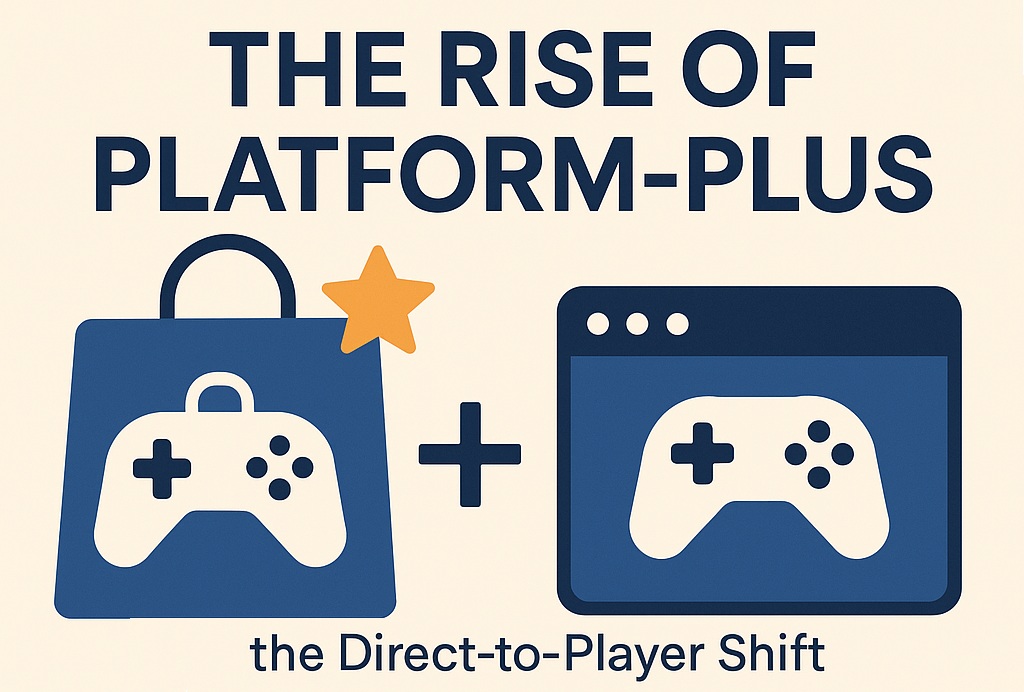
We’re entering the Platform-Plus era. And web games have emerged as the natural path for developers to reclaim ownership of their business.
Contents
- 1 1. Why Developers Are Rewriting the Rules
- 2 2. Direct-to-Player Isn’t Optional Anymore—It’s Survival
- 3 3. Why Web Games Are Built for Platform-Plus
- 4 4. Monetization on the Web is Clinically Better
- 5 5. Platform-Plus: Treat Platforms Like Marketing Channels
- 6 6. What Smart Studios Are Doing Right Now
- 7 7. 2026 Outlook: The Web-First Monetization Era
- 8 AppLixir Summary
1. Why Developers Are Rewriting the Rules
The warning signs have been visible for years. Developers felt the first tremors long before Apple was compelled to open alternate payment rights under DMA compliance, long before the Google antitrust ruling exposed unprecedented internal behavior, and long before the business models of the major stores began to shift under competitive and regulatory pressure.
The early cracks appeared in more subtle forms:
- Sudden policy changes with little notice
- Algorithmic adjustments that killed discoverability overnight
- Shifting rules around UA and attribution
- Broad privacy moves that made long-term planning increasingly difficult
A studio thrives under a certain discovery model, only to lose traffic overnight when the storefront rewrites its ranking system. A developer invests heavily in UA, only to watch costs spike after a policy change eliminates a key data signal. A publisher builds a long-term strategy around platform exposure and then sees its visibility evaporate without warning.
The details vary, but the outcome is always the same: the studio absorbs the shock, and the platform moves on.
These experiences reveal a deeper truth. The risk is not that platforms do something malicious. The risk is that they are large, opaque systems whose priorities rarely align with those of the developers who depend on them. Even when everyone means well, misalignment at this scale creates fragility.
The biggest issue is not simply the thirty percent fee, though the math is increasingly difficult to justify. When platforms no longer deliver the discovery they once promised, when they no longer drive the organic reach that originally justified their economics, and when UA costs have skyrocketed because the platforms themselves restricted access to the data that made UA efficient, it becomes hard to see what the developer is actually receiving in return.
When platforms own your players, you’re not running a business—you’re renting one.
2. Direct-to-Player Isn’t Optional Anymore—It’s Survival
This year, the fragility of platform dependence has become impossible to ignore. Apple’s DMA compliance signals a structural change in how mobile commerce will work in Europe and, inevitably, beyond. Developers can finally create alternative storefronts and offer direct payments with significantly improved economics.
Google’s antitrust outcome introduces uncertainty into the future of Android distribution and exposes practices that have shaped the industry for years. Marketplace fee shifts across multiple platforms point to a business model in motion, adapting to external pressure rather than shaping the future with developers as true partners.
None of these events occurred in isolation. Together, they mark a clear inflection point in the relationship between platforms and the studios that build their ecosystems.
The heart of the problem is optionality. When a platform controls your discovery, your monetization, your customer relationship, your data, and your pricing options, you are not running a business—you are renting one. You can create a beautiful product, build a loyal audience, and operate at high efficiency, but you still sit inside a system whose rules change without your input.
The cost of dependence becomes most visible during moments of platform shock. One studio’s entire UA strategy collapsed after a change in privacy rules rendered their attribution model almost useless. Another developer watched their sales plummet because an algorithm changed the way new titles were displayed. A major entertainment company invested years into interactive projects only to see the economics shift midstream, forcing them to reevaluate the entire initiative.
None of these situations arose from developer missteps. They were simply caught inside systems they could not influence or predict.
Developers need channel diversification that gives them control. Enter: the browser.
3. Why Web Games Are Built for Platform-Plus
The shift toward direct relationships is not about bypassing platforms or building heavy proprietary systems. It is about reclaiming the parts of the business that define a studio’s future. And increasingly, that means web games.
Web games offer something fundamentally different from traditional app stores: zero-install, instant accessibility. No download friction, app review delays or platform gatekeepers deciding whether your update goes live today or next week.
What Developers Own on the Web:
Identity – Players create accounts directly with you, not through Apple ID or Google Play Services. You own the relationship from day one.
Payments – Direct payment flows mean you keep more revenue and control pricing, bundles, and promotional strategies without platform approval.
Data – First-party data about player behavior, preferences, and spending patterns flows directly to you—not filtered through platform APIs or privacy restrictions.
Customer Relationship – You can communicate freely with players, deliver personalized experiences, and build loyalty without waiting for platform permission or worrying about policy changes.
The browser ecosystem also aligns with the new privacy-first reality. Instead of fighting against ATT (App Tracking Transparency) restrictions or struggling with cookie deprecation, web games can build first-party data strategies from the ground up. Players who engage on the web are already choosing to interact with you directly.
According to recent data, 61% of gamers globally have adopted cross-platform play, with player lifetime value rising 35% when crossplay features are present. The web is the connective tissue that makes true cross-platform experiences possible—allowing players to move seamlessly between mobile, desktop, and cloud without friction.
Web is the only platform where developers control both access and monetization.
4. Monetization on the Web is Clinically Better
When it comes to monetization, web games offer structural advantages that platforms simply can’t match. Let’s look at the numbers:
| Strategy Lever | Platforms | Web |
|---|---|---|
| Player ownership | ❌ Platform owns data | ✅ Developer owns identity |
| Revenue share | High platform tax (30%) | Developer-controlled |
| Ad models | Interruptive | Reward-driven experiences |
| UA resilience | Fragile after privacy changes | First-party data advantage |
| Iteration speed | Slow approvals | Instant deploy |
The Rewarded Video Advantage
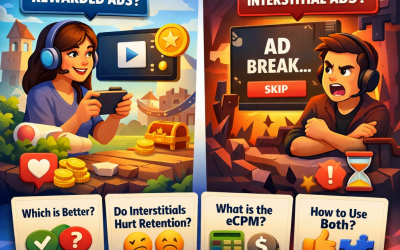
Rewarded video ads have become one of the most effective monetization strategies for web games—and for good reason. Unlike traditional interruptial ads that interrupt gameplay, rewarded videos create a value exchange: players voluntarily watch a 15-30 second video in exchange for in-game benefits like extra lives, bonus currency, or power-ups.
The results speak for themselves:
- Engagement rates up to 80% higher than traditional ad formats
- High completion rates due to voluntary opt-in
- Better player sentiment because ads feel like a choice, not an interruption
- Higher eCPMs for developers
For web games specifically, rewarded video offers even more advantages. With platforms like AppLixir, developers can integrate video monetization without complex SDK implementations. Fill rates in premium markets like the US reach 90%, and with CPM rates that vary by geography, even smaller games can generate meaningful revenue.
Consider a web game with 80,000 daily active users. In the US, with 90% fill rates and competitive CPMs, developers can project reliable monthly revenue without sacrificing player experience. The key is strategic placement—offering rewards at natural transition points like level failures or before unlocking special content.
Real-World Examples
Smart studios are already proving the model:
- Scopely has leveraged web playables to drive user acquisition and monetization
- Meta Instant Games demonstrates how web-based games can achieve massive scale
- Games implementing rewarded video on web report higher margins, better retention, and more predictable revenue compared to platform-only approaches
The web also enables hybrid monetization strategies that combine ads, in-app purchases, and subscriptions without platform restrictions. Research shows hybrid models can lift ARPU by 20-30% compared to single-source models.
5. Platform-Plus: Treat Platforms Like Marketing Channels
The future is not platform or direct. It is platform plus direct. Game Developers will continue to use Steam, the App Store, Google Play, and console storefronts because these ecosystems still play an important role in reach and onboarding. But the studios that thrive in the years ahead will treat platforms as acquisition channels rather than permanent homes.
The Platform-Plus Strategy:
Phase 1: Discovery + Onboarding
Use platforms to build awareness, drive the first purchase, and onboard new players. Leverage their massive reach for initial user acquisition.
Phase 2: Transition to Web
Encourage players to create direct accounts on your web platform. Offer incentives—exclusive content, better pricing, loyalty rewards—that make the transition valuable.
Phase 3: Deeper Engagement + Monetization
The web becomes the home base for:
- Deeper engagement loops
- Higher monetization through direct payments and rewarded video
- Ongoing loyalty programs and community building
- Cross-platform account management
This approach diversifies risk without abandoning platforms entirely. You’re not fighting the ecosystem—you’re using it strategically while building something more resilient underneath.
Smart, well-resourced companies are already rewriting their playbooks:
- Epic has been building a persistent account ecosystem for years
- Spotify fought for control over payment flows to restore direct customer relationships
- Supercell invested heavily in off-platform top-up systems
- NetEase is building its own cross-game ecosystem for global independence
Platforms bring players in—the web keeps the business alive.
6. What Smart Studios Are Doing Right Now
The transition to Platform-Plus doesn’t happen overnight, but developers can start taking action today:
Immediate Actions:
✅ Build a direct web presence for cross-platform accounts
Create a unified login system that works across mobile, desktop, and web. Players should carry their progress, purchases, and identity everywhere.
✅ Use rewarded video to monetize zero-install players
Integrate platforms like AppLixir to capture revenue from players who discover your game on the web without requiring downloads.
✅ Optimize acquisition costs through web top-ups & loyalty
Offer better value on direct purchases compared to in-app options. Bundle loyalty rewards that encourage repeat engagement.
✅ Gradually shift highest-value players to browser sessions
Identify your whales and high-engagement users. Give them reasons to play and spend on the web where you capture more value.
A 3-Phase Adoption Plan:
Phase 1: Launch Web Companion Experience
Start small. Create a web version of your game or a companion portal where players can manage inventory, purchase items, or access exclusive content. This establishes the direct relationship without requiring a full migration.
Phase 2: Shift Spenders to Direct-Payment Web Flows
For players who already spend, offer incentives to purchase through your web shop instead of in-app. Even a 10% discount on web purchases immediately improves margins while giving players better value.
Phase 3: Grow Community + Direct Revenue Flywheel
Use the data and relationships you’ve built to create community features, seasonal events, and loyalty programs that only work on the web. The more engaged players become with your direct channels, the less dependent you are on platform algorithms.
7. 2026 Outlook: The Web-First Monetization Era
As we move from 2025 into 2026, the games industry is entering an era where studios can build real ownership over their audiences, offer more value to players, and construct businesses that are resilient to platform volatility.
What’s Coming:
Hybrid Model Becomes Default
The Platform-Plus approach will shift from innovative to standard practice. Studios that haven’t diversified will face increasing pressure from both platform economics and competitive disadvantage.
Browsers Become the Highest-Margin Monetization Channel
As direct-to-player infrastructure matures and tools like rewarded video prove their value, the web will consistently outperform platforms on revenue per user—especially for engaged players.
Defensible Ownership
Developers who move now will own their player relationships, data, and monetization destiny. Those relationships become defensible moats that platform algorithm changes can’t touch.
Continued Algorithm and Privacy Shocks
Platforms will continue evolving their policies, privacy frameworks, and discovery algorithms. Studios without direct channels will continue absorbing these shocks with no recourse.
Cross-platform gaming is now mainstream, with player lifetime value rising 35% when crossplay features are present. The web is the connective infrastructure that makes this possible at scale.
The closest path to the player—and their wallet—runs through the browser.

AppLixir Summary
Game studios don’t need to escape platforms. They need to escape dependence.
The infrastructure still works. The storefronts still operate. Nothing dramatic has fallen apart. What has eroded is trust, and trust is the thing that held the system together.
Web games will define the next decade of game monetization. Not because they replace platforms, but because they give developers what platforms no longer reliably provide: discovery, control, optionality, and direct relationships with players.
When developers control their customer relationships, they can communicate more freely, understand player preferences more deeply, and deliver better value without waiting for platform approval.
The developers who embrace this shift early, those who understand that optionality is the foundation of long-term success, will define the next decade of the games industry. The ones who continue to rely solely on platforms will find themselves reacting to changes they cannot control.
The winners will be the ones who take control now.
The path forward is not complicated. It is simply a return to a basic truth: the closer you are to your players, the stronger your business becomes. Developers finally have the tools, the opportunity, and the necessity to make that truth real.